Navigating Climate-Resilient Home Insurance Quotes for High-Risk Zones: A Comprehensive Guide

Introduction
The escalating frequency and severity of extreme weather events—ranging from catastrophic wildfires in California to unprecedented hurricanes along the Gulf Coast—have fundamentally disrupted the global real estate and insurance markets. Traditional actuarial models, which historically relied on decades of stable climate data, are struggling to predict modern environmental volatility. For homeowners living in designated high-risk areas, this shift has manifested as skyrocketing premiums, policy non-renewals, or complete market withdrawals by major insurers.
In this challenging landscape, climate-resilient home insurance quotes for high-risk zones have emerged as a critical necessity. Unlike conventional policies that merely cover post-disaster rebuilding costs, climate-resilient insurance incorporates proactive risk mitigation, rewarding homeowners who invest in structural durability with lower premiums and guaranteed coverage. This comprehensive guide explores how homeowners can navigate this evolving insurance landscape, secure competitive quotes, and safeguard their properties against climate-induced hazards.



Understanding Climate-Resilient Home Insurance
Climate-resilient home insurance represents a paradigm shift from reactive indemnification to proactive risk reduction. Standard home insurance policies typically evaluate a property based on general geographic data and historical loss statistics. In contrast, climate-resilient policies leverage advanced predictive modeling and geographic information systems (GIS) to assess a property’s specific vulnerability and its defensive capabilities.
Underwriters of climate-resilient policies focus heavily on “mitigation-based pricing.” This means that if a homeowner retrofits their property to withstand specific localized threats—such as installing impact-resistant roofing in hail alleys or creating defensible space in wildfire zones—the insurer adjusts the risk profile accordingly, leading to more affordable premium quotes.
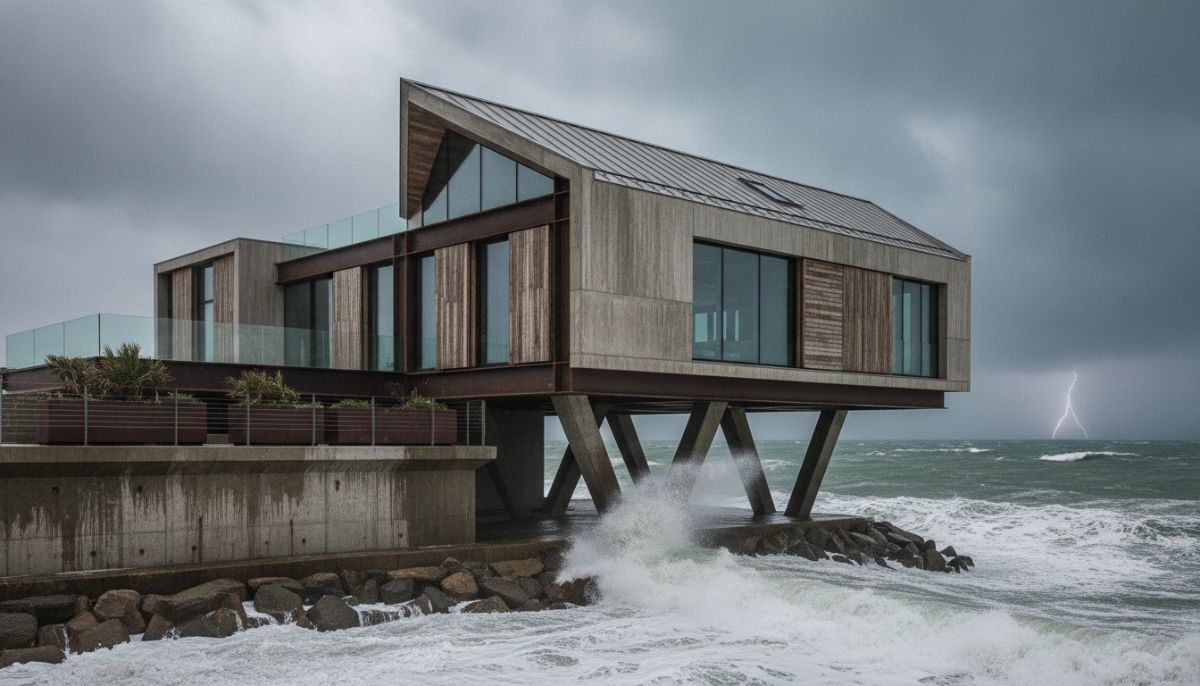
Key Factors Influencing Climate-Resilient Home Insurance Quotes
Securing competitive insurance quotes in high-risk zones requires a deep understanding of the variables that underwriters analyze. While macro-environmental risks (like regional sea-level rise) are beyond individual control, micro-level property attributes can significantly influence the final quote.
1. Structural Engineering and Fortification
The materials and construction techniques used in a home are the primary determinants of its resilience rating. Insurers look for specific certifications, such as the Insurance Institute for Business & Home Safety (IBHS) “FORTIFIED” standard. Features that lower risk include:
- Wind-Resistant Roofing: Metal roofs or impact-resistant shingles rated Class 4.
- Storm Shutters and Impact Glass: Reinforced windows designed to withstand flying debris during category 4 or 5 hurricanes.
- Foundation Elevation: Elevating living spaces above the base flood elevation (BFE) in coastal or riverine floodplains.
2. Defensible Space and Vegetation Management
In wildfire-prone regions, insurers closely evaluate the immediate surroundings of a structure. Maintaining a 100-foot buffer zone cleared of dry brush, dead trees, and flammable materials dramatically increases a home’s chances of survival, directly correlating with lower insurance rates.
3. Community-Level Resilience Initiatives
Insurers do not look at homes in isolation. The resilience of the surrounding community—such as updated municipal building codes, seawall construction, and efficient storm drainage systems—can positively impact regional insurance rates.
Traditional vs. Climate-Resilient Home Insurance
To better understand the differences between these two insurance models, consider the following comparison:
| Feature | Traditional Home Insurance | Climate-Resilient Home Insurance |
|---|---|---|
| Risk Assessment | Based on historical claims and general ZIP code data. | Utilizes real-time climate modeling, GIS, and specific property mitigation features. |
| Premium Incentives | Minimal discounts for basic security/fire alarms. | Substantial, tiered premium discounts for verified structural fortifications (e.g., IBHS Fortified). |
| Rebuilding Philosophy | Rebuilds to pre-loss condition using standard materials. | Emphasizes “Build Back Better” programs, funding resilient upgrades post-disaster. |
| Underwriting Flexibility | Prone to sudden cancellations or non-renewals in high-risk areas. | More stable coverage options for proactive homeowners who meet strict mitigation standards. |
| Policy Structure | Standardized, one-size-fits-all coverage. | Highly customized, often incorporating parametric components for rapid payouts. |
How to Secure Affordable Quotes in High-Risk Zones
Obtaining affordable climate-resilient home insurance quotes for high-risk zones requires a proactive, strategic approach. Homeowners can no longer rely on simple online aggregation tools; instead, they must present a documented case of risk mitigation to specialty underwriters.
“The future of property insurance in high-risk zones hinges on a shared responsibility: homeowners must actively fortify their properties, and insurers must fairly reflect these mitigation efforts in their pricing models.” — Financial Risk Analyst
Step 1: Conduct a Professional Risk Assessment
Before seeking quotes, hire a licensed engineer or a certified home inspector to evaluate your property’s climate vulnerability. Obtaining an official wind mitigation certificate or a wildfire hazard assessment provides tangible proof of your home’s resilience that you can submit to potential insurers.
Step 2: Implement Targeted Fortification Upgrades
Focus on high-ROI upgrades that directly address the primary peril of your region. For instance, in hurricane-prone zones, focus on securing roof-to-wall connections (hurricane clips). In flood zones, install hydrostatic flood vents in crawlspaces.
Step 3: Work with Independent Brokers specializing in Excess and Surplus (E&S) Lines
If standard admitted carriers (like State Farm or Allstate) refuse to write policies in your area, look to the Excess and Surplus (E&S) market. E&S insurers specialize in high-risk, non-standard risks and have the underwriting flexibility to draft highly customized, climate-resilient policies.

Navigating State-Backed Insurers of Last Resort
When private market options are entirely exhausted, homeowners in high-risk zones must turn to state-backed programs, such as the Fair Access to Insurance Requirements (FAIR) plans or state-run windpools (e.g., Florida’s Citizens Property Insurance Corporation).
While these programs guarantee coverage, they are often expensive and offer limited protection. However, many state-backed plans are now introducing mitigation discount programs, allowing homeowners to lower these historically high rates by implementing the same climate-resilient upgrades valued by the private market.
The Rise of Parametric Insurance: A Modern Solution
An exciting development in the realm of climate-resilient coverage is parametric insurance. Unlike traditional insurance that pays out based on the actual damage assessed after an event, parametric policies pay out a predetermined, lump-sum amount immediately when a specific climate trigger is met—such as a Category 3 hurricane passing within a 50-mile radius of the property or floodwaters reaching a specific height.
Parametric insurance bypasses the lengthy claims adjustment process, providing rapid liquidity that allows homeowners to secure their properties and begin emergency repairs immediately, mitigating secondary damage like mold or structural collapse.
Conclusion: Investing in Resilience for Long-Term Peace of Mind
As climate change continues to rewrite the rules of property ownership, securing climate-resilient home insurance quotes for high-risk zones is no longer just a financial transaction—it is a cornerstone of climate adaptation. While retrofitting a home to meet stringent resilience standards requires an upfront capital investment, the long-term payoff is undeniable: substantially lower annual premiums, preserved property values, and, most importantly, the assurance that your home can withstand the elements.
By taking a proactive approach to risk mitigation, collaborating with specialized brokers, and embracing innovative insurance structures like parametric coverage, homeowners can successfully navigate the volatile insurance market and build a sustainable, secure future in even the most vulnerable landscapes.