Shielding the Modern Workforce: The Rise of On-Demand Micro-Insurance for Gig Economy Freelance Workers

The global labor market is undergoing a seismic shift. The traditional 9-to-5 employment model, once the bedrock of economic stability, is increasingly yielding ground to the gig economy. Driven by technological advancements and a desire for autonomy, millions of professionals worldwide are choosing freelancing, contract work, and platform-based gig labor. However, this newfound freedom comes with a significant compromise: the loss of employer-sponsored safety nets. Unlike traditional employees, independent contractors do not enjoy automatic access to health insurance, workers’ compensation, or disability benefits. To bridge this critical gap, a revolutionary financial technology solution has emerged: on-demand micro-insurance for gig economy freelance workers. By leveraging digital platforms, real-time data, and flexible pricing structures, this innovative insurance model offers tailored, episodic protection that aligns perfectly with the volatile and dynamic nature of freelance work.
Understanding the Vulnerabilities of the Gig Economy Workforce






The rapid expansion of the gig economy has exposed deep systemic vulnerabilities. Gig workers—ranging from ride-hailing drivers and food delivery couriers to high-skilled software developers and freelance graphic designers—operate in a perpetual state of financial precarity. A single illness, a traffic accident, or equipment damage can completely halt their income-generating capacity.
Traditional insurance products are fundamentally ill-suited for this demographic. Standard commercial insurance policies require long-term commitments, rigid monthly or annual premiums, and complex underwriting processes designed for established enterprises. For a freelancer whose income fluctuates wildly from week to week, committing to fixed high premiums is not only financially impractical but often impossible. Consequently, a vast majority of gig workers remain completely uninsured or severely underinsured, leaving them one minor crisis away from financial ruin. This systemic failure underscores the urgent need for a more agile, accessible, and affordable protection mechanism.
What is On-Demand Micro-Insurance?
On-demand micro-insurance represents a paradigm shift in how risk is managed and priced. Unlike conventional insurance, which provides continuous coverage over a fixed calendar year, on-demand micro-insurance allows workers to purchase highly specific coverage exactly when they need it, sometimes down to the hour or the specific task.
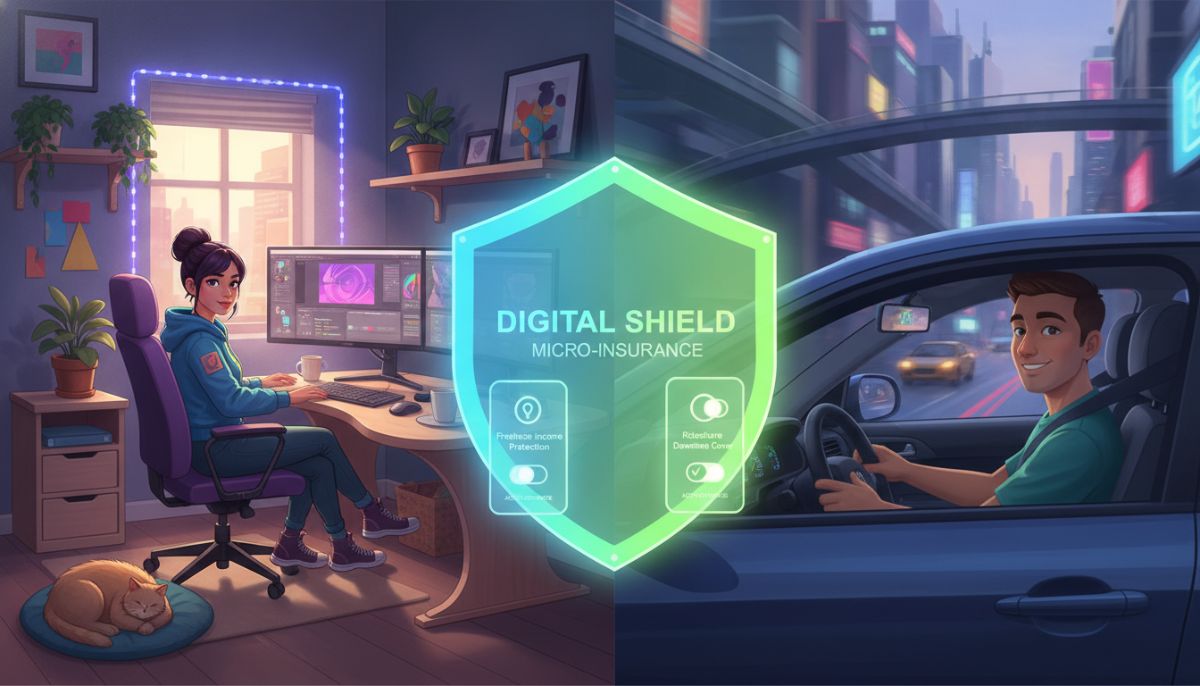
By definition, micro-insurance refers to low-cost, low-coverage policies tailored to low-income individuals or underserved markets. When combined with “on-demand” technology, it becomes a dynamic tool. For instance, a delivery driver can activate liability insurance via a smartphone app the moment they log onto a delivery platform and deactivate it when they log off. This level of granularity ensures that freelance workers only pay for protection during active working hours, eliminating the waste of paying for idle coverage.
Key Features of On-Demand Micro-Insurance for Freelancers
The architectural foundation of on-demand micro-insurance for gig economy freelance workers rests on several key pillars:
- Episodic and Task-Based Coverage: Policies are triggered by specific events or durations, such as a single rideshare trip, a specific photography shoot, or a week-long consulting project.
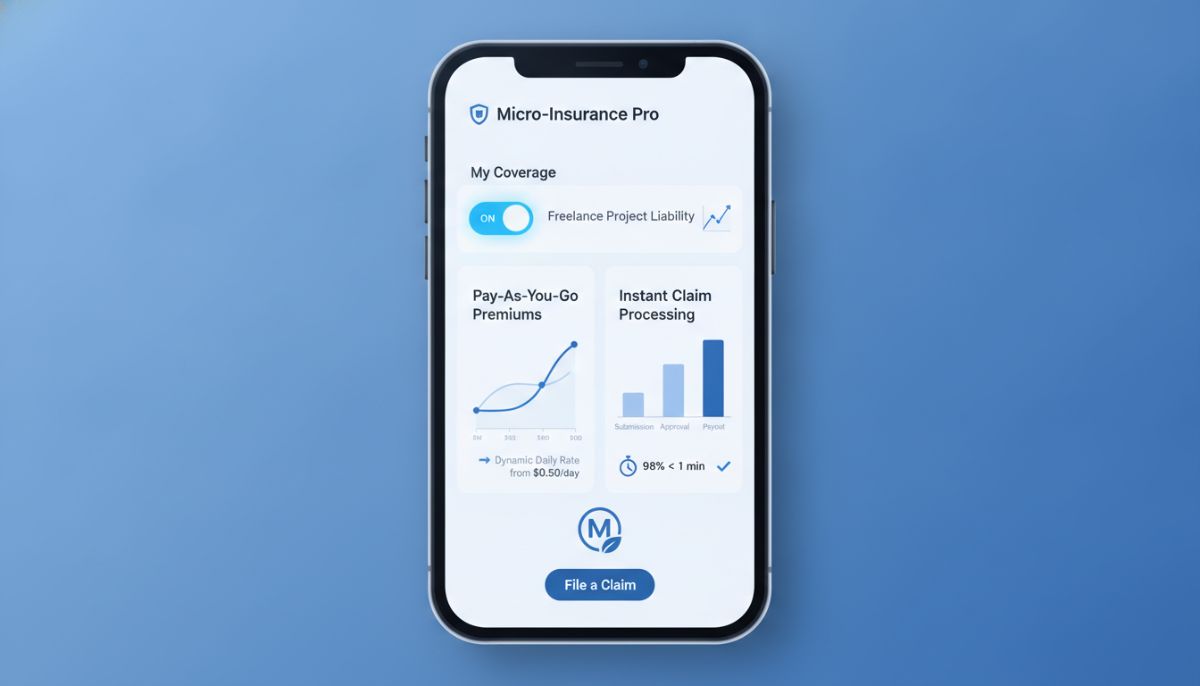
- Pay-As-You-Go Pricing: Premium payments are directly tied to the duration of exposure, making the cost proportional to the revenue generated during that period.
- Digital-First Experience: The entire lifecycle—from onboarding and underwriting to claims filing and payouts—is managed digitally via mobile applications. This eliminates paper-heavy bureaucracy and dramatically speeds up processing times.
- Algorithmic Underwriting: Providers utilize real-time data, telematics, and artificial intelligence to assess risk dynamically, offering fairer pricing based on actual behavior and current conditions.
Comparative Analysis: Traditional Insurance vs. On-Demand Micro-Insurance
To truly understand the value proposition of on-demand micro-insurance for gig economy freelance workers, it is essential to compare it directly with traditional commercial insurance policies.
| Feature | Traditional Commercial Insurance | On-Demand Micro-Insurance |
|---|---|---|
| Contract Duration | Annual or multi-year terms | Episodic, hourly, daily, or task-based |
| Premium Structure | Fixed monthly/annual installments | Dynamic, pay-as-you-go, or pay-per-mile |
| Underwriting Process | Manual, historical data, slow approval | Algorithmic, real-time data, instant activation |
| Accessibility | Requires brokers, heavy paperwork | Mobile apps, API integrations with gig platforms |
| Cost of Entry | High initial deposit and high deductibles | Extremely low or zero upfront cost, low deductibles |
| Flexibility | Rigid, difficult to modify mid-term | High, easily adjusted or paused via smartphone |
How On-Demand Micro-Insurance Benefits Different Gig Niches
The gig economy is highly heterogeneous, comprising various sectors with distinct risk profiles. On-demand micro-insurance offers custom solutions for each:
1. Transportation and Delivery Services
Rideshare and delivery drivers face high physical risks. Micro-insurance can automatically activate when the driver is on a delivery route, covering third-party liability and vehicle damage without burdening them with expensive personal commercial auto insurance when they are off duty.
2. Creative and Professional Services
Freelance copywriters, developers, and consultants face professional liability risks, such as intellectual property disputes, data breaches, or project delays. Micro-professional indemnity insurance can be bound specifically for the duration of a high-value contract.
3. Manual Labor and Taskers
Independent contractors offering home repairs, cleaning, or moving services face physical injuries. Micro-accident policies can cover medical expenses for injuries sustained specifically while performing a task.
“The rise of the gig economy has dismantled the traditional relationship between work and social protection. On-demand micro-insurance is not merely a financial product; it is a critical socio-economic infrastructure that restores security to the modern independent workforce without sacrificing their flexibility.”
Challenges and the Road Ahead for Gig Insurance
Despite its immense potential, the widespread adoption of on-demand micro-insurance faces several structural hurdles. First, regulatory frameworks in many jurisdictions are still designed around traditional insurance models. Regulators often struggle to classify and approve micro-policies that open and close in minutes. Second, there is a prominent awareness gap; many gig workers are unaware that these flexible, low-cost options exist, often believing they must choose between high-cost commercial policies or going entirely unprotected.
Furthermore, data privacy and platform integration remain complex. For on-demand micro-insurance to work seamlessly, insurance tech (insurtech) companies must deeply integrate their APIs with gig platforms like Uber, Upwork, or Fiverr. This requires robust data-sharing agreements that protect worker privacy while allowing accurate, real-time risk assessment. As insurtech continues to mature, we can expect greater collaboration between governments, gig platforms, and insurers to build standardized, cross-border micro-insurance ecosystems that safeguard the global freelance talent pool.
Conclusion
On-demand micro-insurance for gig economy freelance workers represents the future of workplace protection. By aligning insurance structures with the fluid realities of freelance life, this innovative model provides a vital safety net that empowers workers to pursue independent careers with confidence. As the gig economy continues to expand, the scaling of flexible, accessible, and affordable micro-insurance will not only protect individual workers but will also stabilize the broader digital economy, ensuring sustainable growth for the modern global workforce.