Parametric Travel Insurance for Automated Flight Delay Compensation: The Future of Smart Travel

In an era where travel demand has reached unprecedented heights, flight disruptions have unfortunately become a standard component of the global transit experience. For decades, travelers facing flight delays were subjected to a secondary, often more exhausting ordeal: the tedious process of claiming insurance compensation. From hoarding paper receipts to enduring hours of back-and-forth communication with customer service agents, the traditional indemnity-based claim system has long been ripe for disruption. Enter parametric travel insurance for automated flight delay compensation—a revolutionary approach that leverages real-time data, automated triggers, and smart contracts to redefine how travelers are compensated for disruptions.
Unlike traditional policies that require proof of financial loss and manual verification, parametric insurance operates on a pre-defined index. If a specific parameter is met—such as a flight being delayed by more than two hours—the policy triggers an automatic payout directly to the policyholder’s account. This article explores the mechanics, technology, benefits, and future of this groundbreaking insurtech innovation.






What is Parametric Travel Insurance?
Parametric travel insurance, often referred to as index-based insurance, is a non-traditional insurance product that pays out a set amount based on the occurrence of a specific event, rather than the actual magnitude of the loss. The foundation of a parametric policy lies in two key elements: an objective, verifiable metric (the parameter) and a pre-agreed payout structure.
In the context of aviation, the parameter is typically a specific time threshold of a flight delay. For instance, a policy might state: ‘If Flight SQ22 is delayed by more than 180 minutes, the policyholder will receive a lump-sum payout of $150.’ Because the data is objective and publicly verifiable through independent flight-tracking databases, there is no need to assess the traveler’s actual financial loss. The payout is triggered automatically, without the need for human intervention, claims adjusters, or extensive proof of loss.
How Automated Flight Delay Compensation Works
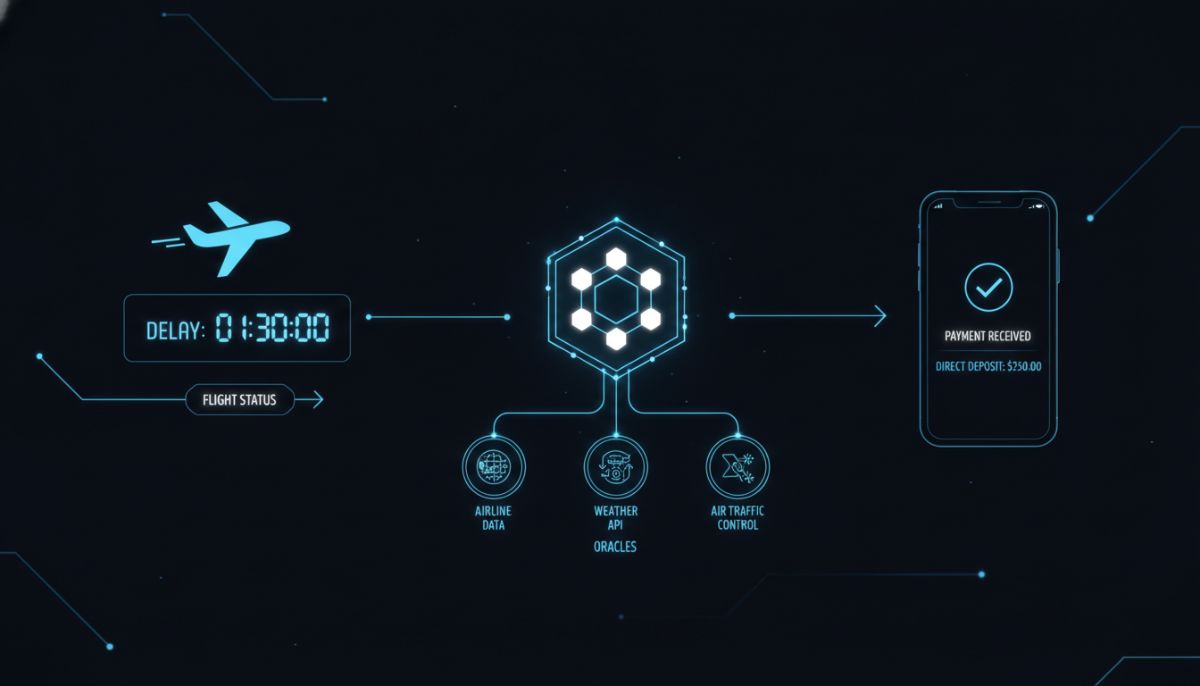
The operation of parametric travel insurance for automated flight delay compensation is incredibly streamlined. The process can be broken down into four key stages:
1. Policy Purchase: The traveler purchases a parametric flight delay policy prior to departure. During the transaction, they provide their flight number and select their preferred payout parameters (such as delay duration and payout amount).
2. Continuous Monitoring: The insurance provider’s system integrates with real-time global aviation database APIs (such as FlightStats or FlightAware) to monitor the status of the insured flight.
3. Trigger Event: If the flight’s actual departure or arrival time exceeds the pre-established delay threshold, the trigger event is officially recorded.
4. Automated Payout: The system immediately initiates a transfer of funds to the traveler’s pre-registered bank account, credit card, or digital wallet. Often, the traveler receives a notification and the funds before they have even boarded their delayed flight.
Traditional vs. Parametric Travel Insurance: A Comparative Analysis
To fully appreciate the advantages of parametric travel insurance for automated flight delay compensation, it is essential to compare it with traditional travel insurance policies. Traditional policies are built on indemnity, meaning they exist to reimburse you for actual, documented losses. Parametric models, conversely, prioritize speed, objectivity, and convenience.
Below is a comprehensive comparison highlighting the operational and structural differences between these two methodologies:
| Operational Feature | Traditional Travel Insurance | Parametric Travel Insurance |
|---|---|---|
| Claim Initiation | Manual submission of forms and evidence by the policyholder | Automated by the insurer’s monitoring system |
| Proof of Loss Required | Receipts, airline delay certificates, proof of alternative purchases | None (strictly based on public aviation delay data) |
| Verification Method | Manual review by claims adjusters | Programmatic validation via trusted data oracles |
| Payout Timeline | Several weeks to months | Instantaneous (minutes to hours after trigger) |
| Dispute Potential | High (due to policy exclusions, clauses, and fine print) | Zero (the event either happened or it did not) |
| Payout Flexibility | Restricted to reimbursing specific expenses (e.g., food, hotel) | Unrestricted cash payout to be used at the traveler’s discretion |
The Technology Behind Parametric Insurance: Smart Contracts and Oracles
The seamless nature of automated flight delay compensation is made possible by a sophisticated tech stack combining Application Programming Interfaces (APIs), decentralized ledger technology (blockchain), and smart contracts.
Smart Contracts
In blockchain-based parametric insurance, smart contracts are self-executing agreements with the terms of the contract directly written into lines of code. The code exists across a distributed, decentralized network. When the pre-defined conditions of the flight delay are met, the smart contract automatically executes the payout function without any human oversight. This eliminates the counterparty risk of the insurer delaying or denying a legitimate claim.
Data Oracles
Smart contracts on a blockchain cannot access data outside their network on their own. To solve this, developers use ‘oracles.’ Oracles act as bridges that securely retrieve external data—in this case, real-time flight status from global aviation authorities—and feed it to the smart contract. Once the oracle verifies that a delay has crossed the threshold, it sends a cryptographic proof to the smart contract, triggering the automated flight delay compensation.
Key Advantages of Parametric Travel Insurance
1. Zero Paperwork and Instantaneous Disbursements
The traditional insurance claim process is notoriously cumbersome. Travelers must collect physical delay certificates from airlines, keep receipts for airport meals, and fill out long PDF forms. Parametric insurance completely removes this friction. Because the system knows the flight is delayed, the payout is triggered automatically. Travelers often receive funds directly to their digital wallets while still waiting at the gate, allowing them to purchase lounge access or meals in real time to mitigate their discomfort.
2. Elimination of Subjectivity and Claims Disputes
Traditional claims are frequently denied or reduced due to complex policy exclusions (such as delays caused by ‘acts of God’ versus ‘technical errors’). Parametric travel insurance eliminates subjectivity. There are no exclusions based on the cause of the delay; the only factor that matters is the objective passage of time. If the flight is delayed past the agreed limit, the system pays out. This binary, transparent nature builds tremendous trust between the consumer and the insurer.
3. Reduced Operational Overhead for Insurers
For insurance companies, processing small-value flight delay claims manually is economically inefficient. The administrative cost of hiring adjusters to review receipts often exceeds the claim’s value. By automating the entire lifecycle of a claim—from monitoring to payout—insurers drastically reduce their operational overhead. These savings can then be passed down to consumers in the form of lower, more competitive premium rates.
‘The true revolution of parametric travel insurance lies in the shift of trust from human adjusters to immutable code, ensuring that when a flight delay occurs, compensation is not a promise to negotiate, but an automated guarantee.’
Real-World Scenarios and Use Cases
To understand the practical value of automated flight delay compensation, consider the following scenario of a corporate traveler, Sarah, who has a tight connection in Frankfurt:
Sarah’s initial flight from London is delayed by 2.5 hours due to air traffic control congestion. Because she purchased a parametric travel insurance policy with a 2-hour delay trigger, her policy automatically registers the delay. Before she even lands in Frankfurt, a notification pops up on her smartphone: a $100 compensation has been deposited into her account. She uses these funds immediately to book an airport lounge where she can comfortably work and reschedule her connecting flight, turning a highly stressful situation into a manageable minor inconvenience.

Current Limitations and the Future Landscape
While parametric travel insurance for automated flight delay compensation represents a significant leap forward, it is not without challenges. One limitation is that it does not replace comprehensive travel insurance. Parametric policies are highly specialized; they do not cover medical emergencies, lost baggage, or trip cancellations due to illness. Therefore, travelers must view parametric coverage as a complementary layer to their primary insurance travel portfolio rather than a complete replacement.
Additionally, basis risk remains a minor concern. Basis risk occurs when the insurance payout does not perfectly align with the actual loss. For example, a traveler might experience a delay of 115 minutes, which is highly disruptive but falls just short of a 120-minute parametric trigger, resulting in no payout. Conversely, a traveler might suffer no real inconvenience but still receive a full payout because the flight hit the 120-minute mark.
Despite these challenges, the future of parametric insurtech is incredibly bright. As the global travel sector increasingly digitizes, we can expect to see deeper integrations between airlines, travel booking platforms, and parametric insurers. In the near future, flight delay coverage may be embedded directly into flight tickets as a standard, one-click add-on, powered entirely by invisible, automated back-end protocols.
Conclusion
Parametric travel insurance for automated flight delay compensation is transforming the passenger experience by replacing bureaucratic delays with technological precision. By utilizing smart contracts, real-time data oracles, and automated workflows, this modern insurance model aligns perfectly with the demands of today’s hyper-connected traveler. It replaces frustration with financial peace of mind, proving that when technology is leveraged effectively, even the headache of a flight delay can be resolved with elegant simplicity.